
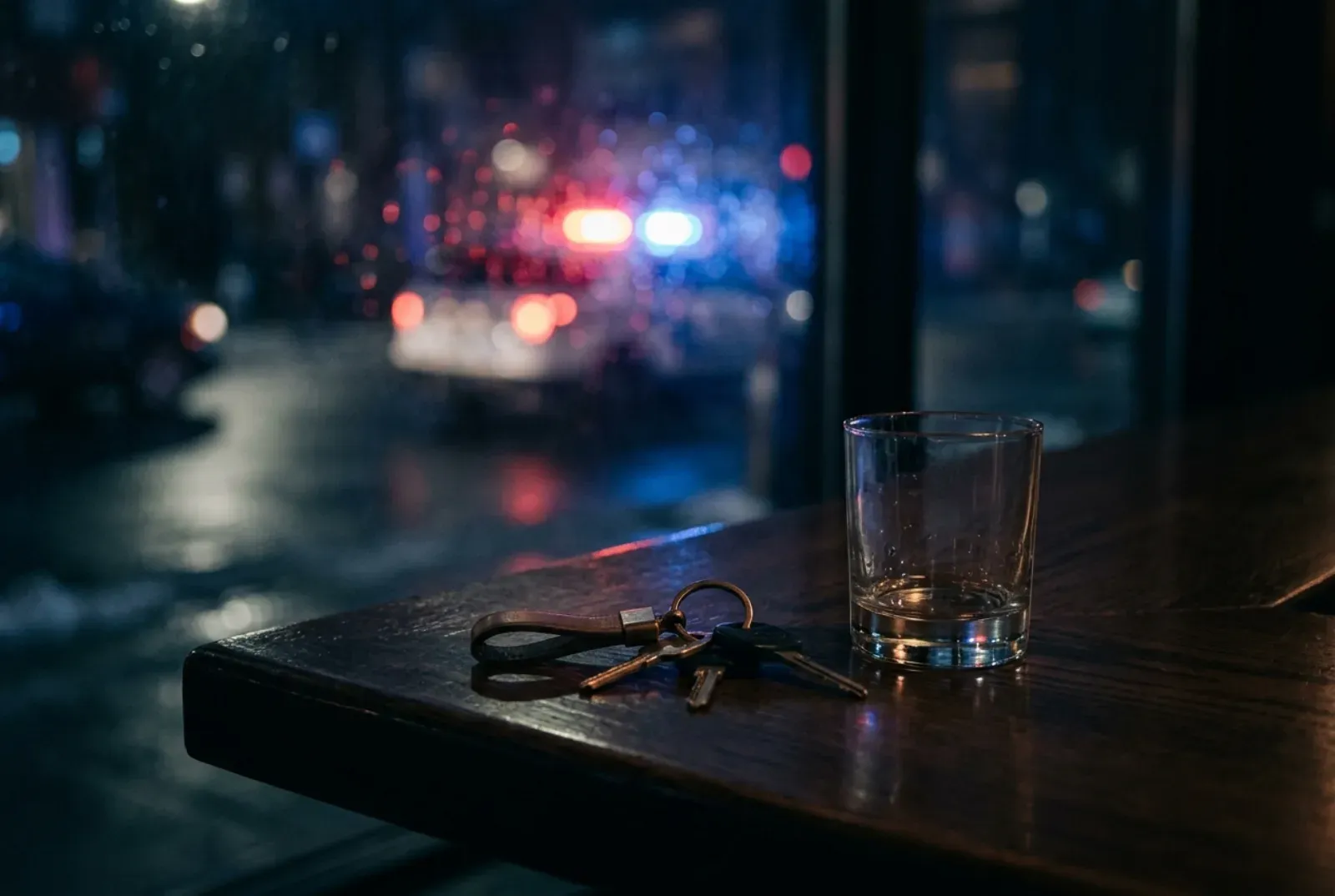
In Quebec, drinking and driving is punished under two regimes that apply together: the Criminal Code, a federal statute that defines the offences and penalties, and the Highway Safety Code, which provides for administrative sanctions managed by the Société de l’assurance automobile du Québec (SAAQ). The consequences begin as soon as you are stopped, well before any trial: immediate licence suspension, possible seizure of the vehicle and, if you are convicted, a fine, a driving prohibition and a criminal record.
Here is what the law provides, step by step, since the reform of December 18, 2018, which modernized the rules on impaired driving.
What are the alcohol and drug impaired driving offences?
The Criminal Code now refers to a person whose “ability to operate” a vehicle is impaired. A person commits an offence, in particular, if they:
- operate a vehicle while their ability to operate it is impaired to any degree by alcohol, a drug or a combination of both, even if their blood alcohol concentration is below 80 mg;
- have a blood alcohol concentration equal to or over 80 mg of alcohol per 100 mL of blood within two hours after ceasing to operate the vehicle;
- have, within the same period, a blood drug concentration equal to or over the limits set by regulation, or a combination of alcohol and a drug above the prescribed limits;
- fail or refuse, without reasonable excuse, to comply with a police officer’s demand to provide a sample or undergo a test.
Under the Criminal Code, “operating” a motor vehicle includes having care or control of it. A person sitting behind the wheel of a parked vehicle can therefore, depending on the circumstances, be charged.
What happens when you are stopped by police?
Mandatory alcohol screening
Since December 2018, a police officer who lawfully stops a driver and has an approved screening device on hand may demand an immediate breath sample, even without any suspicion that the driver has been drinking. This is mandatory alcohol screening. If the officer has reasonable grounds to suspect the presence of alcohol, they may also order physical coordination tests.
Testing at the police station: the approved instrument
A “fail” result on the screening device may give the officer reasonable grounds to believe that an offence has been committed. You will then be taken to the police station to provide two breath samples into an approved instrument, operated by a qualified technician, at least 15 minutes apart. When the two results differ, the lower one is used.
If the first sample is taken more than two hours after you stopped driving, the law presumes that your blood alcohol concentration within those two hours was the result obtained, plus 5 mg for every 30 minutes beyond the two hours.
Suspected drug use: tests and evaluating officer
When an officer suspects the presence of a drug, they may demand physical coordination tests or an oral fluid sample analyzed with approved drug screening equipment. If they have reasonable grounds to believe that your ability to drive is impaired by a drug, they may then demand an evaluation by a specially trained evaluating officer, as well as blood samples.
Your right to a lawyer
You have the right to remain silent and, upon arrest or detention, the right to retain and instruct counsel without delay, guaranteed by section 10(b) of the Canadian Charter of Rights and Freedoms. Use it: make no statement before speaking to a lawyer. This right does not, however, allow you to refuse or delay the roadside screening test: a refusal is a separate offence.
Immediate SAAQ sanctions
Regardless of any criminal charge, the Highway Safety Code provides for administrative sanctions that apply as soon as you are stopped, before any judgment:
- an immediate 90-day licence suspension if your blood alcohol concentration is 80 mg or more, if you refuse to provide a sample or, for drugs, if an evaluating officer concludes that your ability to drive is impaired;
- a 30-day vehicle seizure, in particular if your blood alcohol concentration is 160 mg or more, if you refuse to provide a sample or if you have a previous conviction for an alcohol- or drug-related driving offence. The seizure may last longer for repeat offenders.
These administrative sanctions follow their own rules and short deadlines. It is best to consult a lawyer within the first few days.
Zero alcohol: who does it apply to?
In Quebec, certain drivers may not drive with any alcohol in their body, including:
- drivers under 22 years of age;
- holders of a learner’s licence;
- holders of a probationary licence.
For them, any presence of alcohol, even far below 80 mg, leads to sanctions under the Highway Safety Code, including a licence suspension.
Penalties upon conviction
Minimum penalties are set by the Criminal Code. They apply to impaired driving, to a blood alcohol concentration of 80 mg or more and to refusing to comply with a demand.
First offence
- minimum fine of $1,000;
- minimum fine of $1,500 if the blood alcohol concentration is between 120 and 159 mg;
- minimum fine of $2,000 if the blood alcohol concentration is 160 mg or more;
- minimum fine of $2,000 for refusing to provide a sample;
- driving prohibition of at least one year and up to three years, plus the length of any term of imprisonment.
Second offence
- minimum of 30 days’ imprisonment;
- driving prohibition of two to ten years, plus the length of the term of imprisonment.
Subsequent offences
- minimum of 120 days’ imprisonment;
- driving prohibition of at least three years, plus the length of the term of imprisonment.
Maximum penalties and aggravating circumstances
The maximum penalty is 10 years’ imprisonment when the Crown proceeds by indictment. On summary conviction, it is two years less a day of imprisonment and a $5,000 fine. When the impaired driving causes bodily harm to another person, the maximum rises to 14 years’ imprisonment; when it causes death, to life imprisonment.
The court must also take certain aggravating circumstances into account, including a blood alcohol concentration of 120 mg or more, the presence of a passenger under 16 years of age, or driving for remuneration. In addition, a driving prohibition order takes effect on the day it is made, unless the court orders it to run consecutively to a prohibition already in effect.
Finally, a conviction results in a criminal record, with possible consequences for employment, travel abroad and the cost of car insurance.
Getting your licence back: assessment, ignition interlock and restricted licence
The SAAQ assessment
Your licence is not automatically returned at the end of the prohibition. You must first pass the assessment required under the SAAQ’s program for assessing and reducing the risk of impaired driving:
- a summary assessment, generally for a first offence;
- a comprehensive assessment, in particular for refusing to provide a sample, a high blood alcohol concentration or a recent prior offence.
Depending on the outcome of the assessment, the SAAQ may require any vehicle you drive to be equipped with an alcohol ignition interlock device for a set period, which is longer for repeat offenders.
The restricted licence with an ignition interlock
It is often possible to drive again before the end of the prohibition through the alcohol ignition interlock program. After a minimum period of absolute prohibition (the period set by the court for a first offence, at least three months after sentencing for a second offence and at least six months for subsequent offences), you may apply to the SAAQ for a restricted licence. This licence only allows you to drive a vehicle equipped with an ignition interlock device.
In practice, you lease the device from a supplier recognized by the SAAQ, which installs it in your vehicle, and you then present the lease agreement to the SAAQ. Fees apply: issuing the licence, installation and monthly rental of the device. The SAAQ sets the eligibility conditions, and certain situations exclude access to the program.
Drug-impaired driving and cannabis
The basic rules for drugs are the same as for alcohol. For THC, the main active ingredient in cannabis, federal regulations set the following blood limits:
- from 2 ng to less than 5 ng per millilitre: a less serious offence, punishable by a maximum fine of $1,000;
- 5 ng or more per millilitre: an offence subject to the same penalties as alcohol-impaired driving;
- a blood alcohol concentration of 50 mg or more combined with 2.5 ng of THC or more per millilitre: the same regime as alcohol-impaired driving.
For several other drugs, such as cocaine or methamphetamine, any detectable concentration in the blood within two hours after driving is prohibited. Keep in mind that driving while your ability is impaired by a drug, to any degree, is an offence regardless of the measured concentration.
The Highway Safety Code also provides for zero tolerance for the presence of cannabis or any other drug in saliva. According to the Government of Québec, however, this measure will only come into force once screening equipment is approved for use in Quebec.
Can you challenge an impaired driving charge?
Yes, but the available defences were narrowed by the 2018 reform. The results of the approved instrument are conclusive proof when the conditions set out in the law are met: blank and calibration tests before each sample, an interval of at least 15 minutes, and a difference of no more than 20 mg between the results. Showing how much alcohol you drank is no longer enough to set those results aside.
Every case nonetheless deserves a rigorous review by a criminal defence lawyer, particularly on the following points:
- whether the stop and the detention were lawful;
- whether your rights were respected, including the right to counsel;
- whether the devices, tests and sampling times complied with the law;
- full disclosure of the evidence by the Director of Criminal and Penal Prosecutions (DPCP), which prosecutes cases in Quebec;
- the exceptions provided by law, for example when you drank alcohol after you stopped driving and had no reason to expect to be asked for a sample;
- your right to be tried within a reasonable time.
Frequently asked questions
Can I refuse to blow into the device?
No. Failing or refusing, without reasonable excuse, to comply with the officer’s demand is a criminal offence, punishable for a first offence by a minimum fine of $2,000. A refusal also results in an immediate licence suspension and seizure of the vehicle.
Can I be charged if I am asleep in my parked car?
It is possible. The Criminal Code also covers a person who has care or control of a vehicle. The circumstances, in particular whether there was a realistic risk that the vehicle would be set in motion, are decisive: have your situation reviewed by a lawyer.
How long will I lose my licence for a first offence?
Your licence is suspended for 90 days as soon as you are stopped. If you are convicted, the court imposes a driving prohibition of one to three years. You may, however, be able to drive a vehicle equipped with an ignition interlock sooner, after the period set by the court, by obtaining a restricted licence from the SAAQ.
Will I have a criminal record?
Yes. A conviction for impaired driving results in a criminal record. After a certain waiting period, you can apply to the Parole Board of Canada for a record suspension.
Does Quebec apply a 0.05 limit?
No. As of October 19, 2026, the criminal limit remains 80 mg of alcohol per 100 mL of blood, and Quebec does not impose administrative sanctions between 50 and 80 mg on experienced drivers. Zero-alcohol rules do, however, apply to young and new drivers, and an impaired driving charge remains possible below 80 mg.
Charged with impaired driving? Talk to a lawyer quickly
The first days after an arrest matter: administrative sanctions, release conditions and preparing your defence. Our lawyers in Montreal and the West Island, at our Pointe-Claire office, can review the evidence, check that your rights were respected and advise you on the best strategy. To learn more, visit our criminal defence lawyer in Montreal page.
To discuss your situation, call Liverman Arrais at (438) 861-9500 or write to us using our contact form.
This article provides general legal information, current as of October 19, 2026, and does not constitute legal advice. Every situation is different: consult a lawyer for advice tailored to yours.